Five years have passed and through the US and Taliban agreement, Afghanistan was effectively handed over to a fanatical and religious fascist force that has stripped away all fundamental freedoms and brought the aspirations of an entire people and young generation, especially Afghan women to a devastating halt.
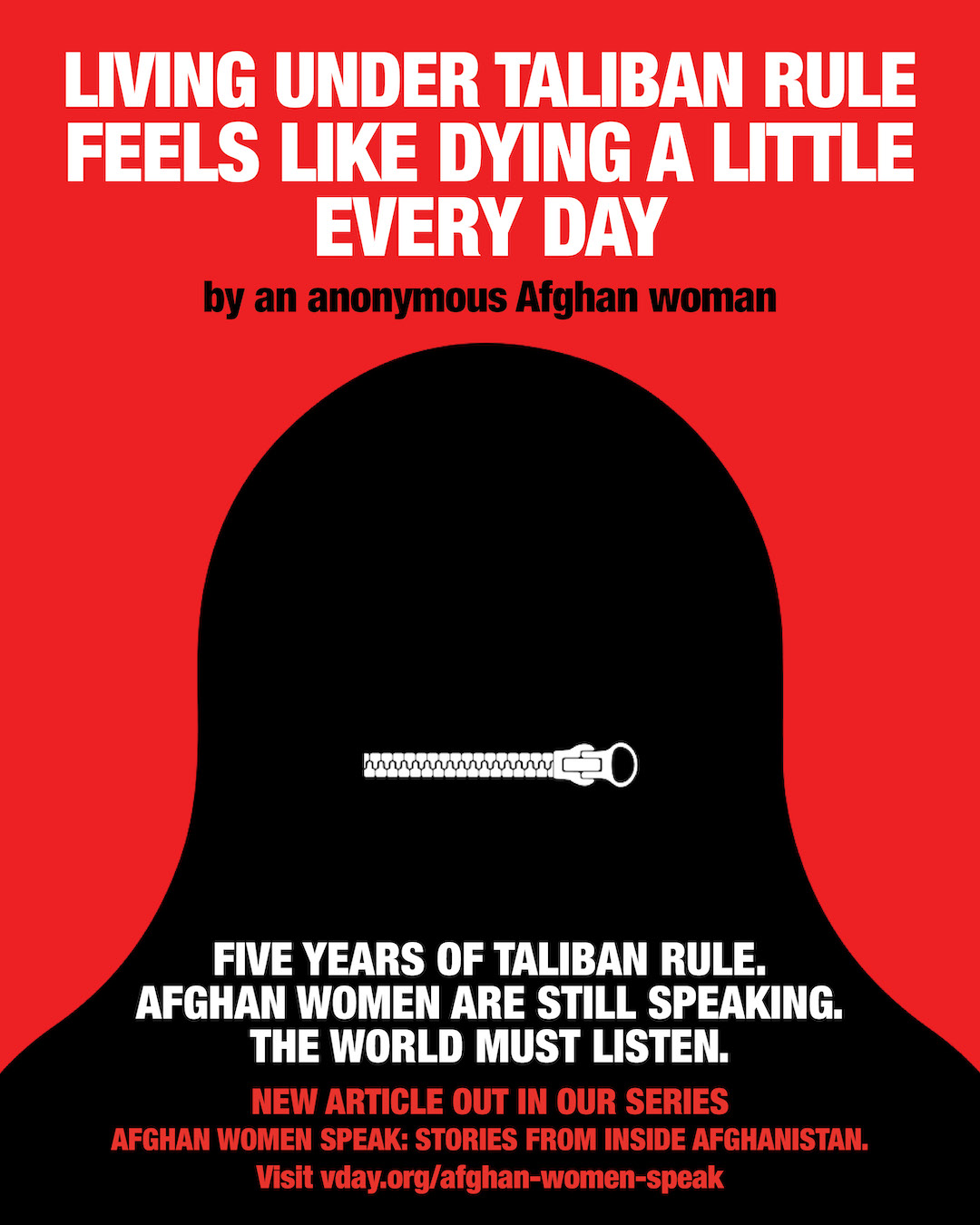
Afghanistan is now a country where almost every aspect of life is controlled, restricted, or forbidden. Living under Taliban rule feels like dying a little every day. People’s souls are crushed, their dreams are shattered, and their hopes for a better future are fading. There is almost no space left for freedom of expression, dissent, or peaceful resistance because of pervasive repression and authoritarian control.
Generations of Afghans who have grown up over the past fifty years amid war, displacement, and political turmoil are now facing another profound crisis. Their fundamental human rights have been taken away, leaving millions to endure severe psychological distress, hopelessness, and trauma. Decades of struggle and progress have been pushed backward, while anything that represents growth, initiative, freedom, creativity, joy, or peaceful protest is increasingly restricted or forbidden.
Today, Afghan girls are denied access to secondary and higher education and are increasingly excluded from social and public life. Beauty salons have been shut down. Music and many forms of art have been restricted. Women face severe restrictions on movement and, in many circumstances, are required to have a male guardian to travel. Their clothing, employment, and participation in public life are tightly controlled. In short, women are being deprived of the freedom to choose, learn, work, develop, and live with dignity and peace of mind.
As the economy continues to deteriorate, poverty, forced and child marriages, and the exploitation of vulnerable families have increased. Women who have lost their husbands or who have no male provider are among those suffering the most, particularly when they are prevented from earning a living. One woman who recently lost her husband in a traffic accident described her situation painfully: “What should I do now? I was a hairdresser, but the Taliban closed my salon and won’t let me work. How can I support my children?”
The restrictions on women’s education and employment are also creating a serious shortage of female health professionals. This has devastating consequences for patients, particularly women who may struggle to access appropriate medical care. Those suffering from serious illnesses may need treatment abroad, yet travel restrictions, closed borders, and prohibitively expensive visas can make such treatment impossible. Patients are left without access to potentially life saving care.
Afghanistan has become a place where freedom is increasingly treated as a crime, where people are denied the right to choose how they live, learn, work, and express themselves. Behind these restrictions are millions of human beings whose dignity, hopes, and futures are being slowly taken away.
Meanwhile, much of the world continues to watch from the sidelines. Afghanistan’s suffering must not become a forgotten humanitarian crisis. We call on governments, international organizations, and the global community to awaken their conscience, confront the reality of life under Taliban rule, and take meaningful action to protect the Afghan people—especially women and children.
The people of Afghanistan deserve a future in which they can live with dignity, pursue education, work freely, express themselves, create, dream, and determine their own destiny. The world must not accept silence and repression as the permanent reality of Afghanistan. Our people deserve freedom, peace, prosperity, and hope.